Eoghan sagte „Fin für Zahnärzte“. Er hat recht. Hier ist, was das wirklich bedeutet.
Intercom hat die Fin API Platform mit Verträgen ab 250.000 $/Jahr und Apex gelauncht — ein spezialisiertes LLM, das GPT-5.4 und Opus 4.5 übertrifft. Aber die eigentliche Geschichte ist nicht das Modell. Es ist die Lücke in der vertikalen Umsetzung.

Chris
April 8, 2026 · 12 min read
Ask AI about this post




Letzte Woche hat Intercom die Fin API Platform gelauncht. Verträge starten bei 250.000 $/Jahr. Apex — das neue spezialisierte Customer-Service-LLM — schlägt laut Benchmarks GPT-5.4 und Opus 4.5 bei Resolution Rate, Halluzinationsrate und Latenz.
Das ist eine wichtige Ankündigung. Und die meisten Takes werden sich auf die Modell-Benchmarks konzentrieren.
Ich will stattdessen auf einen Satz aus Eoghan McCabes Post eingehen.
„Wir werden nie für diese spezifischen Branchen bauen.“
Hier das volle Zitat, weit hinten in seiner Ankündigung versteckt:
„Fin für Zahnärzte? Warum nicht. Fin für Autohäuser? Klar. Wir werden nie für diese spezifischen Branchen bauen, aber wir würden es lieben, wenn das jemand anders tut.“
Lies das zweimal.
Der CEO von Intercom — der ankündigt, was er das weltbeste Customer-Service-Modell nennt — sagt offen: Die vertikale Implementierungsarbeit ist nicht unsere Aufgabe.
Das ist kein dahingeworfener Satz. Das ist eine strategische Grenze. Und sie hat reale Folgen für jeden, der Fin bei KMU-Kunden ausrollt.
Was die API-Plattform tatsächlich öffnet
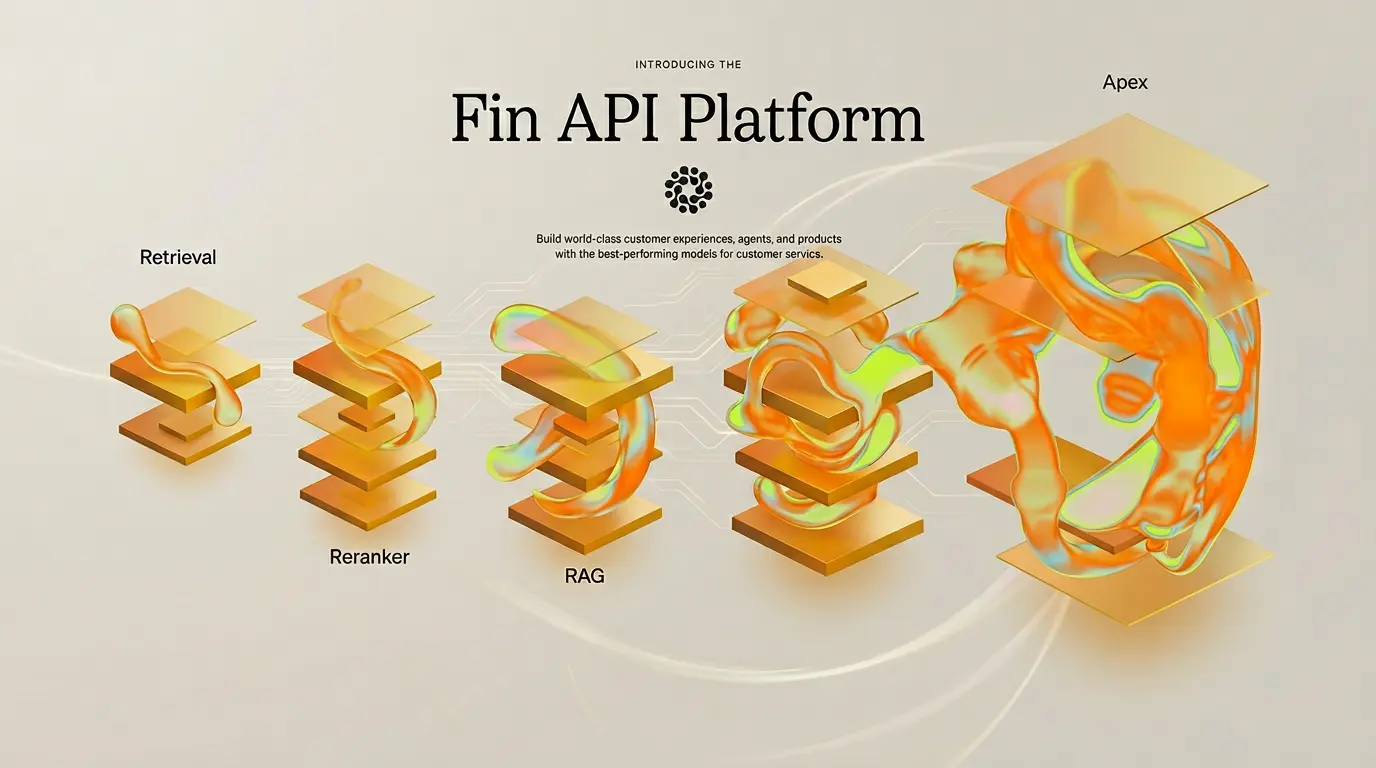
Die Fin API Platform gibt Buildern Zugriff auf vier Modellschichten:
- Fin Apex 1.0 — das generative Modell, das die finalen Antworten produziert
- Fin RAG API — die vollständige Retrieval-Augmented-Generation-Pipeline
- Fin Retrieval API — ein eigenes, auf Customer Service optimiertes Retrieval-Modell
- Fin Reranker API — Relevanz-Scoring für abgerufene Inhalte
Das ist wirklich starke Infrastruktur. Die Apex-Benchmarks sind ernst zu nehmen: +2,8 % Resolution Rate ggü. Frontier-Modellen, 65 % weniger Halluzinationen als Sonnet 4.6, 0,6 Sekunden schneller bei Time-to-First-Token.
Die reale Wirkung bestätigt das: Intercom berichtete, dass ein großer Gaming-Kunde seine Resolution Rate über Nacht von 68 % auf 75 % steigerte, nachdem Apex ausgerollt wurde — ein Rückgang ungelöster Konversationen um 22 % und der größte Einzelsprung seit dem Launch von Fin.
Aber die jährliche Untergrenze von 250.000 $ sagt klar, wer die primäre Zielgruppe ist: Konzerne, Startups, die vertikale Agenten bauen, und Intercoms eigene Plattform-Konkurrenten, die die Modelle lizenzieren wollen.
Für die große Mehrheit der KMU ist das kein Direktzugangsterritorium. Und das ist okay — denn die Wertschöpfungslücke liegt für sie ohnehin nicht in der API.
Die Wissensschicht ist weiterhin der Burggraben
Folgendes hat jede KI-Implementierung, die ich begleitet habe, bestätigt, und der AI Agent Blueprint von Intercom macht es explizit:
Resolution Rate ist primär kein Modellproblem. Es ist ein Content-Problem.
Der Blueprint sagt es klar: „AI Agents sind nur so gut wie ihre Inputs.“ Und Eoghans beiläufiger Kommentar über Zahnärzte und Autohäuser zeigt auf genau dasselbe: Du kannst das beste Modell der Welt haben — wenn die Wissensarchitektur darunter nicht um die Funktionsweise deiner Branche herum gebaut ist, wirst du keine relevanten Resolution Rates erreichen.
Apex auf einer generischen, schlecht strukturierten Wissensbasis wird unterperformen. Eine gut konfigurierte Fin-Instanz auf einer sauberen, vertikal abgestimmten Content-Schicht wird sie konstant übertreffen.
Das ist die Lücke, die die API-Plattform nicht schließt. Und es ist die Lücke, die für KMU-Deployments zählt. Wenn du deine Content-Schicht baust oder auditierst, deckt unser Guide zu Wissensbasen für KI-Support die Grundprinzipien ab.
Wie „Content vor Konfiguration“ in der Praxis aussieht
Wenn wir bei dot2.solutions von Content vor Konfiguration sprechen, meinen wir etwas Konkretes:
Bevor du eine einzige Intercom-Einstellung anfasst, musst du wissen:
- Welche Fragen deine Kunden tatsächlich stellen (nicht die, von denen du denkst, dass sie sie stellen)
- Welche davon hohes Volumen und niedrige Komplexität haben — dein schneller Weg zur Resolution
- Wo bestehender Content falsch, veraltet oder gar nicht vorhanden ist
- Wie deine SOPs zum Procedures-Format von Fin passen
- Welche bedingte Logik deine komplexesten Workflows wirklich brauchen
Das ist Wissensarchitektur. Sie ist nicht glamourös. Sie macht keine schönen Benchmark-Folien. Aber sie ist die Arbeit, die entscheidet, ob du 65 % Resolution erreichst oder 30 %.
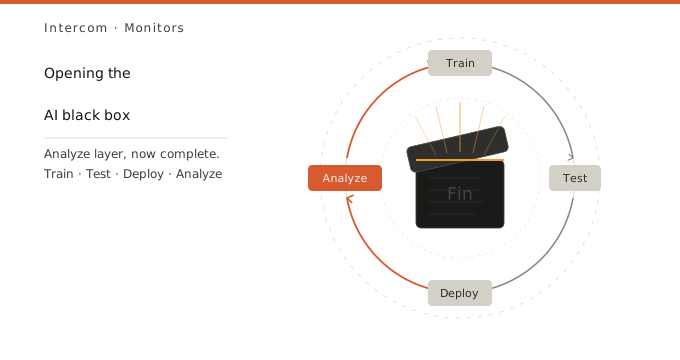
Intercom hat das beste Modell dafür gebaut. Sie haben auch starkes Tooling drumherum gebaut — Guidance, Procedures, Simulations, Topics Explorer. Die Plattform ist wirklich exzellent. Und mit dem jüngsten Launch von Monitors ist die Observability-Schicht jetzt ebenfalls komplett — du kannst endlich messen, ob Fins Antworten deinen Standards genügen, nicht nur ob sie Konversationen lösen.
Was sie nicht tun — laut eigener Aussage — ist die vertikale Content-Arbeit. Der tiefe Einstieg, wie eine Schweizer Treuhand mit Kunden über Mehrwertsteuer spricht oder wie ein Genfer SaaS-Unternehmen Churn-Konversationen auf Französisch führt. Das ist Implementierungsarbeit. Das ist Praktikerarbeit.
Die Chance, die das schafft
Die Fin API Platform wird eine Welle neuer Builder vertikaler Agenten erzeugen. Eoghan lädt sie explizit ein. Manche werden gut finanzierte Startups sein. Andere Beratungen, die sich über Nacht umbenennen.
Die meisten werden mit der Modellschicht starten, weil das neu und aufregend ist.
Wer Erfolg hat, lernt am Ende, was jeder erfahrene Fin-Implementierer schon weiß: Das Modell ist der einfache Teil. Was Zeit, Urteilskraft und Domänenwissen braucht, ist die Content-Architektur darunter.
Das ist die asymmetrische Chance für Implementierungspartner, die diese Arbeit schon gemacht haben — die Frameworks gebaut, Wissensaudits geführt und gelernt haben, aus welchen Content-Strukturen Fin tatsächlich Antworten generiert und welche es umgeht.
Die Modellschicht öffnet sich. Die Wissensschicht bleibt der Burggraben.
Für eine breitere Sicht, wie proaktive KI-Support-Strategien auf dieser Basis aufbauen, siehe unseren Artikel zu proaktivem KI-Support 2026.
Eine Anmerkung zu den Benchmarks
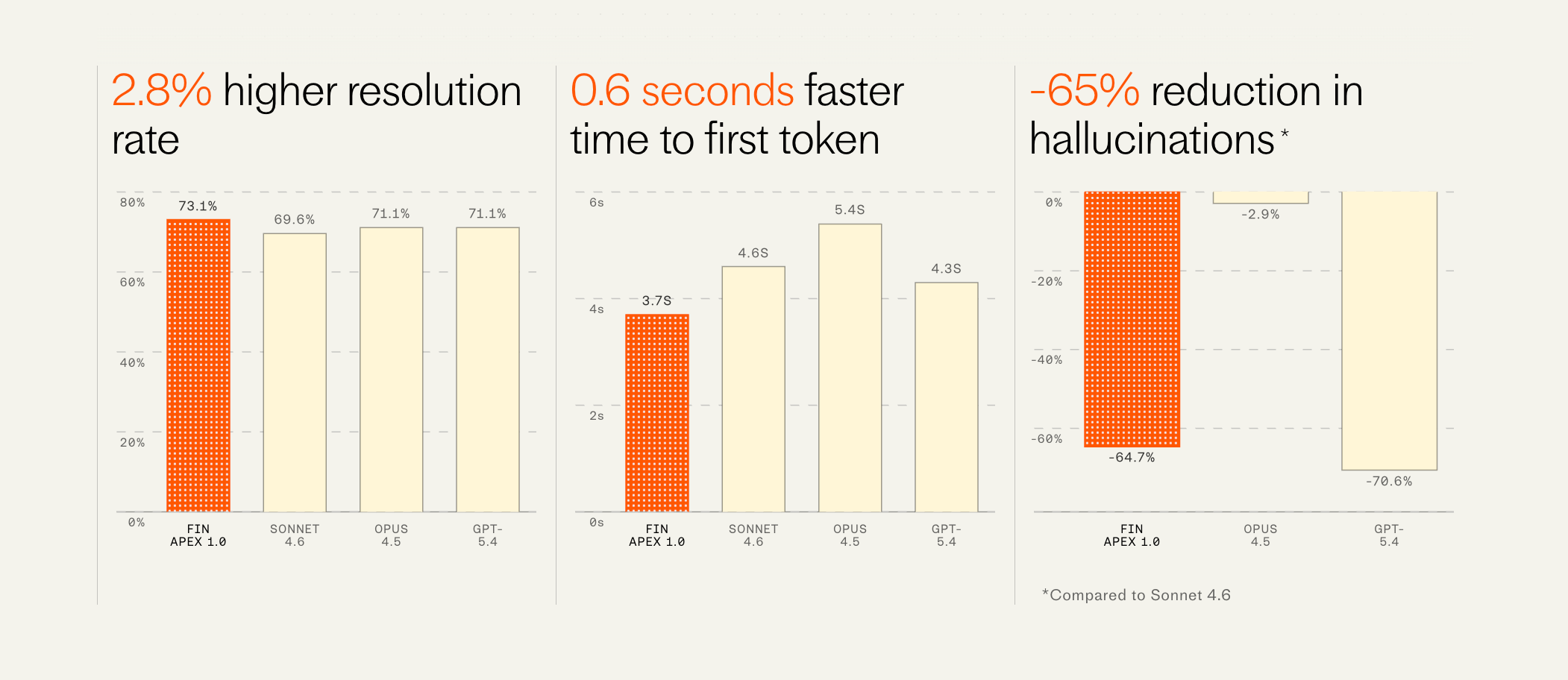
Die Apex-Zahlen verdienen einen Moment. Sich auf einem Customer-Service-spezifischen Benchmark günstig mit GPT-5.4 und Opus 4.5 zu vergleichen, ist keine triviale Behauptung. Intercom hat ein 60-köpfiges KI-Team, ein Jahrzehnt Customer-Service-Daten und Jahre an Produktionssignal aus Millionen Fin-Konversationen pro Woche.
Dass spezialisierte vertikale Modelle generalistische Frontier-Modelle übertreffen, ist genau das, was man in reifen KI-Verticals erwartet. Medizin, Recht, Finanzen und Customer Service bewegen sich alle in diese Richtung. Die Fin-Modell-Suite ist weiter, als ich erwartet hätte.
Allein der Fin Escalation Router — >98 % Genauigkeit bei Handoff-Entscheidungen, 0,5 s schneller als LLM-basiertes Routing — zeigt, wie viel zusammengesetzter Wert in der spezialisierten Sub-Agenten-Architektur steckt, nicht im Headline-LLM.
Über die reine Modellleistung hinaus umfasst Intercoms volle Suite jetzt sieben spezialisierte Modelle: Apex 1.0, Retrieval, Reranker, Issue Summarizer, Feedback Parser, Language Detector und den Escalation Router. Jedes ist gezielt für eine Stufe der Support-Pipeline gebaut und fine-getuned — eine zusammengesetzte Architektur, die mit generischen Frontier-Modellen allein schwer zu replizieren ist.
Was das für unsere Kunden bedeutet
Für Schweizer KMU, die Fin über dot2.solutions einsetzen, ändert sich an unserem Kernansatz nichts. Die Plattform, auf der ihr lauft, ist gerade spürbar besser geworden. Während die Custom-API-Plattform ein Viertelmillionen-Eintrittsticket hat, integriert Intercom das Apex-Modell direkt in das Standard-Fin-Produkt. Das heißt: Apex ist ab sofort das Modell hinter eurer Fin-Instanz.
Was sich verbessert: Resolution-Genauigkeit, Halluzinationsrate, Antwortlatenz und Eskalationsentscheidungen.
Was sich nicht ändert: die Qualität eurer Wissensbasis, die Struktur eurer Procedures, die Klarheit eurer Guidance-Konfiguration. Diese bleiben die Haupt-Hebel für höhere Resolution Rates — und dort verbringen wir die meiste Zeit.
Wenn ihr Fin schon nutzt, ist jetzt ein guter Moment zu prüfen, ob eure Content-Schicht mit den Modellverbesserungen Schritt hält. Die Strategien zu Quick Questions und Resolution, die wir skizziert haben, sind ein praktischer Startpunkt.
Wenn ihr Fin noch nicht nutzt und diese Ankündigung euch neugierig macht: Der beste Einstieg ist nach wie vor ein Wissensaudit, nicht eine Toolbewertung.
Content vor Konfiguration. Dort wird eure Resolution Rate gewonnen oder verloren — egal, wie gut das Modell wird. Wenn ihr bereit seid, mit dem Einstellungs-Tuning aufzuhören und eine Wissensschicht zu bauen, die Tickets wirklich löst, lasst uns über einen Wissensaudit sprechen.
Häufig gestellte Fragen
Noch Fragen?
Wo das in unsere Arbeit passt
Konkrete nächste Schritte, wenn dieser Artikel zu Ihrem Vorhaben passt.
- Intercom- & Fin-ImplementierungSilver-Partner: Fin-Rollout, Wissensarchitektur, Workflow-Design.Zum Intercom-Service
- Fin live testenStellen Sie unserem Fin-Agenten eine echte Frage und prüfen Sie die Antworten.Demo öffnen
- Webentwicklung & DesignSchnelle, zugängliche Websites auf modernem Stack – an echten Metriken gemessen.Zur Webentwicklung
Share this article
Need Help with Intercom & Fin?
As an Intercom Silver Partner, we specialise in Fin deployment, knowledge base architecture, and AI support automation for Swiss SMEs.
No commitment required • Free 30-minute consultation • Expert guidance