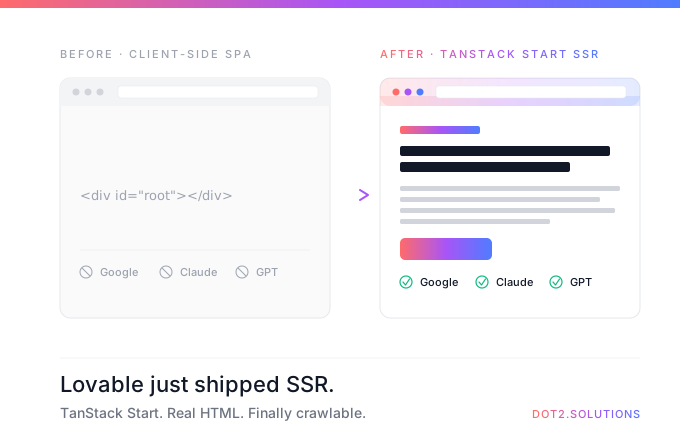
Lovable ha rilasciato l'SSR. Ecco cosa risolve, e cosa no.
Lovable è migrato silenziosamente a TanStack Start con il server-side rendering completo. Il problema di SEO e GEO che stava per spingermi via dalla piattaforma è risolto — per i nuovi progetti. I progetti esistenti sono un'altra storia.

Chris
April 20, 2026 · 8 min read · Updated May 13, 2026
Ask AI about this post



Aggiornamento — 13 maggio 2026: Lovable ha rilasciato oggi la suite completa di discoverability — pre-rendering per le app esistenti, visibilità automatica nelle ricerche AI, revisione SEO on-demand con fix in un clic, e integrazione Semrush nella chat. Alcune di queste influenzano direttamente ciò che descrivo qui sotto. Maggiori dettagli su cosa funziona davvero (e cosa no) nel follow-up. Vedi l'annuncio →
Da un po' di tempo, stavo valutando di migrare fuori da Lovable.
Non perché qualcosa fosse rotto. L'app funziona. Il design regge. I clienti sono soddisfatti. Ma dot2.solutions aveva un problema di SEO cotto nell'architettura. Lovable veniva rilasciato come SPA lato client, il che significava che ogni crawler che conta — quello di Google, il bot di anteprima di LinkedIn, e ora gli agenti di navigazione di ChatGPT e Claude che attingono risposte dal web in diretta — vedeva una div vuota finché JavaScript non veniva eseguito. Nessun ranking. Nessuna GEO (generative engine optimization). Invisibile per i modelli che le persone stanno iniziando a interrogare invece di cercare.
Così ho iniziato a valutare alternative. Vercel con una ricostruzione in Next.js era la strada ovvia. Rocket.new sembrava interessante. Bolt.new era sulla lista. Avevo alle spalle qualche settimana di ricerca — lottavo con questo problema da un po'.
Poi ho aperto un nuovo progetto Lovable per chiedere all'IA se poteva ricostruire qualcosa in Next.js. Ecco cosa mi ha risposto:
Non posso ricostruirlo in Next.js — questo progetto Lovable gira su TanStack Start (React 19 + Vite), non Next.js. Next.js non è supportato qui. La buona notizia: TanStack Start ti dà tutto ciò che hai elencato — SSR, routing basato su file, meta per pagina, funzioni server, deployment edge — quindi possiamo ricostruire la tua app con SSR completo, semplicemente usando TanStack Start invece di Next.js.
È così che ho scoperto che Lovable aveva silenziosamente rilasciato l'SSR.
Cosa è effettivamente cambiato
A partire dal 20 aprile 2026, i nuovi progetti Lovable vengono forniti su TanStack Start con il server-side rendering completo. HTML reale. Pagine crawlable. Meta tag che arrivano al browser al primo passaggio, non dopo che JavaScript ha deciso di eseguirsi.
TanStack Start è un framework React full-stack costruito su Vite — lo stesso strumento che Lovable stava già usando. È arrivato allo stato di Release Candidate all'inizio di quest'anno e sta guadagnando trazione reale come alternativa credibile a Next.js. A differenza di Next.js, adotta un approccio client-first: scrivi una SPA, e l'SSR viene aggiunto sopra come miglioramento. È un adattamento molto più pulito per il codice generato da Lovable rispetto al modello mentale server-first dei React Server Components che Next.js impone. Probabilmente è per questo che Lovable lo ha scelto.
I vantaggi pratici per i nuovi progetti sono reali — il crawler di Google ottiene HTML reale al primo caricamento, gli agenti di navigazione LLM ricevono una pagina che possono effettivamente leggere e citare, le card social funzionano senza hack di injection a build-time, la first paint è più veloce perché il contenuto non aspetta JavaScript, e le funzioni server ti danno chiamate backend type-safe senza dover configurare un layer API separato.
Sotto il cofano
Per chi si chiede cosa c'è esattamente nella scatola, ecco lo stack esatto con cui viene fornito oggi un progetto Lovable fresco: React 19 con TanStack Start su Vite 7, TypeScript in modalità strict, Tailwind v4 con un vero design system (token oklch, tipografia personalizzata), shadcn/ui sulle primitive Radix, routing basato su file via TanStack Router, TanStack Query per i dati, e deployment edge Cloudflare Workers di default.
Alcune di queste scelte contano oltre l'SSR. L'edge Cloudflare Workers significa che crawler e agenti LLM ottengono la risposta in millisecondi ovunque nel mondo — e la latenza di risposta è un fattore di ranking. La toolchain moderna (Vite 7, ecosistema TanStack) mantiene i build veloci e l'output pulito, il che conta man mano che il progetto cresce.
Ho testato questo su un progetto fresco che ho avviato — contenuto completo nel body della risposta, meta tag nell'head, nessuna esecuzione JavaScript richiesta per leggere la pagina. I nuovi default consegnano.
TanStack Start vs Next.js per SEO
Domanda lecita che mi sono posto continuamente durante la ricerca: TanStack Start è effettivamente buono quanto Next.js per il SEO, o Lovable ha semplicemente scelto l'opzione più leggera? Ecco come si confrontano su ciò che conta.
| Capacità SEO | Next.js (App Router) | TanStack Start |
|---|---|---|
| HTML crawlable al primo caricamento | ✓ | ✓ |
| Pre-rendering statico (SSG) | ✓ nativo | ✓ nativo (plugin prerender) |
| Metadati per pagina | ✓ Metadata API | ✓ config route head |
| Sitemap automatica | ✓ convenzione file (sitemap.ts) | ✓ auto via crawling link |
| Rigenerazione incrementale (ISR) | ✓ nativo | Via cache headers / CDN |
| Ottimizzazione immagini | ✓ built-in <Image> | Esterna (plugin Vite) |
| Guida LLMO / dati strutturati | Community | ✓ nella doc ufficiale |
| Flessibilità di deployment | Migliore su Vercel | Qualsiasi piattaforma (via Nitro) |
Sui fondamentali che muovono i ranking — SSR, HTML crawlable, meta tag, sitemap — sono alla pari. Next.js ha più comodità out-of-the-box: il componente <Image> gestisce conversione formato e dimensionamento per te, l'ISR è nativo, e la Metadata API è ben documentata. È giusto — Next.js esiste da più tempo e Vercel ha investito molto nella superficie SEO.
TanStack Start pareggia sui fondamentali e batte Next.js su flessibilità di deployment. Nitro permette di distribuire su Cloudflare, Netlify, Deno, Bun, Node, o qualsiasi altra piattaforma senza lock-in. Il framework include anche una guida di ottimizzazione LLM nella sua documentazione ufficiale, che è un segnale piccolo ma significativo che il team sta pensando a dove sta andando la ricerca, non solo a dove è stata. E per un progetto generato da Lovable, la toolchain basata su Vite è un adattamento più pulito rispetto al sistema di build opinionato di Next.js.
Per un sito che deve classificarsi su Google e essere citato da LLM, entrambi fanno il lavoro. Nessuno dei due è un compromesso.
Cosa non è cambiato
Ecco il trucco che l'IA non ha offerto volontariamente: se il tuo progetto Lovable esisteva prima del 20 aprile, sei ancora sul vecchio template Vite lato client. Nessun pulsante di migrazione. Nessun percorso di aggiornamento automatico. Lovable non ha migrato automaticamente i progetti esistenti — e questo è coerente con come tipicamente vanno le migrazioni da framework a framework, perché non lo sono mai completamente. Semantica di routing diversa, pattern di caricamento dati diversi, confini dei componenti diversi, output di build diversi.
Cosa significa: il problema di SEO e GEO che stava per spingermi via dalla piattaforma è ancora lì, sulla vecchia stack.
Cosa farei concretamente
Sono esattamente in questa situazione, quindi questo è il piano che sto seguendo.
Spostare il blog su Ghost. Questa settimana.
Questo è dove la velocità SEO e GEO conta davvero. I siti marketing si classificano per ricerche di brand — il tuo nome, la tua azienda, i tuoi servizi. Quel traffico arriva quando le persone sanno già che esisti. Il blog è dove competi per la ricerca a coda lunga, per le citazioni da assistenti LLM, e per il tipo di contenuto che si accumula. Ghost è nativo SSR, costruito appositamente per i contenuti, e ti dà dati strutturati, RSS, meta corretti e URL pulite senza dover costruire nulla. Risolvi prima il layer dei contenuti.
Per il tuo sito marketing esistente — esistono soluzioni alternative.
Ho costruito le mie e reggono. Se una ricostruzione completa sulla nuova stack ne valga la pena dipende da quanto l'architettura vecchia ti sta effettivamente costando. Per dot2.solutions, le mie soluzioni alternative bastano perché una ricostruzione non sia urgente. Per progetti più ricchi di contenuti — soprattutto siti client dove la ricerca organica è il canale di acquisizione principale — ricostruire vale lo sforzo, e sto pianificando esattamente questo per diversi miei.
Per i nuovi progetti, costruisci semplicemente su Lovable.
La ragione più importante per cui stavo guardando altre piattaforme è sparita. SEO e GEO sono risolti a livello di piattaforma ora. Questo cambia il calcolo per chiunque abbia scartato Lovable sei mesi fa perché il suo sito non si sarebbe classificato.
Dove mi lascia tutto questo
La cosa che stava per spingermi via da Lovable è risolta. Resto.
I nuovi progetti client vengono costruiti sulla nuova stack. Alcuni dei miei lavori esistenti restano sulla vecchia stack con soluzioni alternative in atto. Il blog migra su Ghost questa settimana perché è lì che la velocità dei contenuti conta davvero.
E la parte di cui sono veramente entusiasta: Ghost espone una Admin API completa — creazione, modifica e gestione programmatica dell'accesso a tutto sulla piattaforma. Il che significa che posso ricostruire l'intero workflow del blog direttamente in Lovable, con Ghost come backend di contenuti nativo SSR. Entrambe le piattaforme giocano le loro forze. Sarà fantastico.
Il layer di contenuti e conoscenza resta mio da possedere — nessuna piattaforma risolve quella parte al posto tuo. Ma il layer di infrastruttura è appena migliorato significativamente, e questo cambia chi dovrebbe essere su questa piattaforma. Se hai scartato Lovable perché il tuo sito non si sarebbe classificato o comparso in una risposta AI, vale la pena dare un'altra occhiata.
Cosa succede dopo
Condividerò come va effettivamente la migrazione — la configurazione Ghost, il workflow di pubblicazione guidato da Lovable, e tutto ciò che si rompe per strada. Se stai ponderando le stesse decisioni, seguimi su LinkedIn, o scrivimi.
Domande frequenti
Hai altre domande?
Dove si inserisce nel nostro lavoro
Passi concreti se questo articolo tocca qualcosa che stai costruendo.
Share this article
Building on Lovable? Let's Talk.
As a top-ranked Lovable expert, we help teams ship production-grade web apps — SEO, GEO, and SSR done right from day one.
No commitment required • Free 30-minute consultation • Expert guidance